
Cleocatra RTP and Volatility
This page explains what RTP and volatility actually mean for Cleocatra, how players usually interpret these numbers, and why they should guide expectations rather than create unrealistic ones.
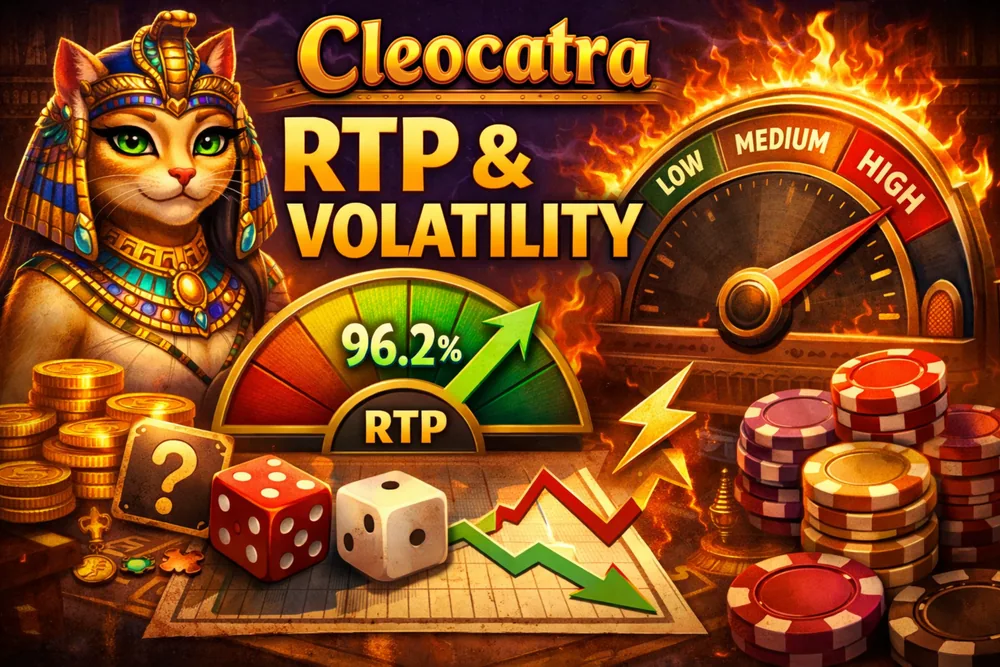
Why players search for RTP and volatility
RTP and volatility are two of the first metrics many users look for when deciding whether a slot feels suitable for them. The problem is that these terms are often repeated without context. This page is meant to make them easier to understand in plain language and to show how they fit into a more realistic view of Cleocatra.
What RTP means in practical terms
RTP stands for return to player. In simple terms, it is a long-run theoretical figure used to describe how a slot is structured over a very large number of spins. For players, the useful takeaway is not that RTP predicts a single session. The useful takeaway is that it provides part of the wider picture when comparing one slot to another.
That is why RTP should be read as a guide metric, not a short-session promise. A player can have a strong or weak session without that changing what RTP means in theory. The number helps frame expectations, but it does not tell you what will happen next.
For Cleocatra specifically, the better approach is to read RTP together with the gameplay style, bonus structure, and volatility level rather than treating it as a stand-alone answer.
How RTP and volatility work together
RTP frames the theory
It helps users compare slots more intelligently, but it is not a predictor of what one short session will do.
Volatility frames the feel
It tells players more about how the session may feel in terms of rhythm and swinginess.
Both metrics need context
Neither RTP nor volatility should be read in isolation from the wider game design and player approach.
Demo helps connect theory to feel
Trying the demo is often the easiest way to connect the metrics to an actual gameplay impression.
What these metrics should mean for a real player
The best way to use RTP and volatility is to set expectations more carefully, not to look for a “winning formula.” These metrics are most useful when they help you decide whether a slot fits your comfort level, your patience, and the kind of session you actually want.
For many users, that means starting with demo mode, reading the review, and only then deciding whether the wider real money environment feels suitable. Metrics can support a decision, but they should not replace the more practical questions around casino choice and session control.
Continue with the pages that add more context
FAQ
What does RTP mean for Cleocatra?
RTP is a long-run theoretical return metric that helps players compare slots, but it does not predict how one short session will go.
What does volatility mean for Cleocatra?
Volatility describes how steady or uneven the gameplay may feel, which is why it matters for session expectations and player comfort.
Should RTP and volatility be used together?
Yes, they make more sense together because RTP frames the theory while volatility helps explain the feel of the slot.
Do these metrics guarantee a better result?
No. They help users understand the slot more clearly, but they should not be treated as a promise of outcomes.
What should I open after reading this page?
The most useful next pages are usually the demo page, review page, gameplay page, and the real money guide.
Use the numbers to guide expectations, not fantasies
RTP and volatility are most useful when they help you decide whether the slot fits your style before you move into a real money session.